713-489-8623 HOUSTON
469-294-5589 DALLAS


713-489-8623 HOUSTON
469-294-5589 DALLAS
Our Locations ➔ Katy ➔ Fibroid Treatment
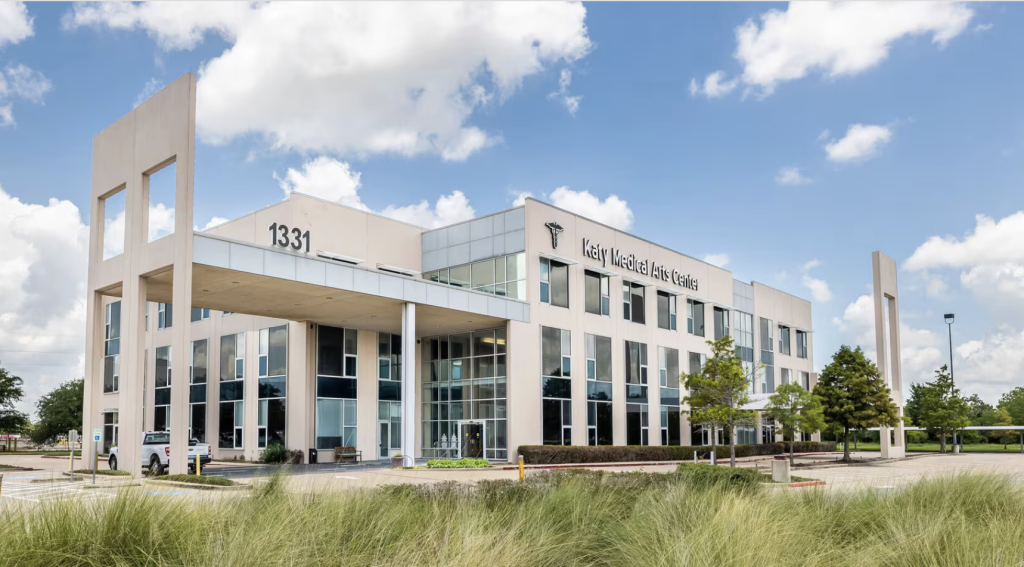
1331 W. Grand Parkway N., Suite 210, Katy, TX 77493
Get directions ➔
Contact us:
Phone: (713) 489-6667
Fax: (713) 575-3688
Office Hours
Monday to Friday: 8am to 5pm
Saturday and Sunday: Closed
Texas Endovascular Katy is an outpatient interventional radiology clinic at 1331 W. Grand Parkway N., Suite 210, Katy, TX 77493, just north of I-10. Dr. Eric Hardee, a co-founder of the practice and the clinic's medical director, evaluates and treats uterine fibroids here with uterine fibroid embolization (UFE). Consultation, treatment, and follow-up all happen in this clinic.
“Most people come to us after being told surgery is the only answer. Very often, it isn't. My job is to show you what's actually possible.”
Uterine fibroids are non-cancerous growths that form in or around the uterus. They can be as small as a pea or as large as a grapefruit, and many women have more than one. Hormones such as estrogen and progesterone often encourage them to grow.
Fibroids are common, affecting up to 80% of women by age 50. Some women never notice them. Others live with heavy bleeding, pelvic pain, and pressure that disrupt daily life. Fibroids are highly treatable, and relief does not always require surgery.
Learn more about uterine fibroids →
Not every fibroid needs treatment. If symptoms are affecting your daily life, it may be time for an evaluation. Consider seeing a fibroid specialist if you have:
Very heavy bleeding with dizziness, fainting, or shortness of breath needs prompt medical attention.
Fibroids can be managed with monitoring, medication, a minimally invasive procedure, or surgery such as myomectomy or hysterectomy. The right choice depends on your symptoms, your goals, and whether you want to keep your uterus. At our Katy clinic, we treat symptomatic fibroids with uterine fibroid embolization (UFE), a non-surgical procedure that shrinks fibroids by cutting off their blood supply. Most patients go home the same day and return to normal activities within 1 to 2 weeks. Compare all fibroid treatment options →
UFE usually takes about an hour, and most patients go home the same day.
More about uterine fibroid embolization →

Outpatient, no hospital stay
No surgical incision, and the uterus stays in place
Wrist access: sit up & walk soon after, no lying flat for hours
Covered by Medicare and most major insurance plans

Dr. Eric Hardee, a board-certified interventional radiologist and the clinic's medical director, sees fibroid patients in Katy. Several of our physicians rotate between clinics, so ask when you call if you would like a specific doctor.
Our Katy clinic offers evaluation for symptomatic fibroids and uterine fibroid embolization (UFE). If UFE is not the right fit, your physician will explain your other options, including when surgery may be the better choice.
UFE is a minimally invasive, non-surgical procedure that treats uterine fibroids by blocking the arteries that feed them. Without a blood supply, the fibroids shrink and symptoms like heavy bleeding and pelvic pressure ease. It is performed by an interventional radiologist through a tiny pinhole, usually in the wrist (sometimes the groin).
No. UFE is performed through a small catheter, usually placed through a tiny pinhole in the wrist, with no abdominal incision and no stitches.
Yes. At our Katy clinic, UFE is usually done through a tiny pinhole in the wrist instead of the groin, so most patients can sit up and walk soon after and go home within 1 to 2 hours. Texas Endovascular pioneered wrist-access UFE in Texas and has offered it since 2015.
You may be a candidate if fibroids are causing heavy bleeding, pelvic pain or pressure, or frequent urination, especially if medication has not helped and you want to avoid major surgery or keep your uterus. A consultation and imaging confirm whether UFE is right for you. Take the 60-second quiz →
Most patients go home the same day. Mild cramping and fatigue are normal for the first day or two and are managed with medication. Most women return to work and everyday activities within 1 to 2 weeks.
Many women have had successful pregnancies after UFE, and the procedure preserves the uterus. If you are planning a pregnancy, tell your physician. For some women a myomectomy is the better option, and your physician will help you weigh both. More on pregnancy after UFE →
No. A hysterectomy is not the only option. UFE is a non-surgical alternative for women with symptomatic fibroids who want to avoid major surgery and keep their uterus. Compare UFE and hysterectomy →
Medicare and most major insurance plans cover UFE. Our team verifies your benefits and explains what you can expect to pay before your visit is scheduled.
We are at 1331 W. Grand Parkway N., Suite 210, Katy, TX 77493, just north of I-10 and less than a mile from Memorial Hermann Katy Hospital. Call (713) 489-6667 for directions or to schedule an appointment.
Scheduling
Please contact our dedicated specialists to schedule a consultation today.