713-489-9075 HOUSTON
469-305-1642 DALLAS

713-489-9075 HOUSTON
469-305-1642 DALLAS
8850 Six Pines Dr Ste 280, The Woodlands, TX 77380
Get directions ➔
Contact us:
Phone: (713) 489-6857
Fax: (713) 575-3688
Office Hours
Monday – Friday: 8am – 5pm
Saturday – Sunday: Closed
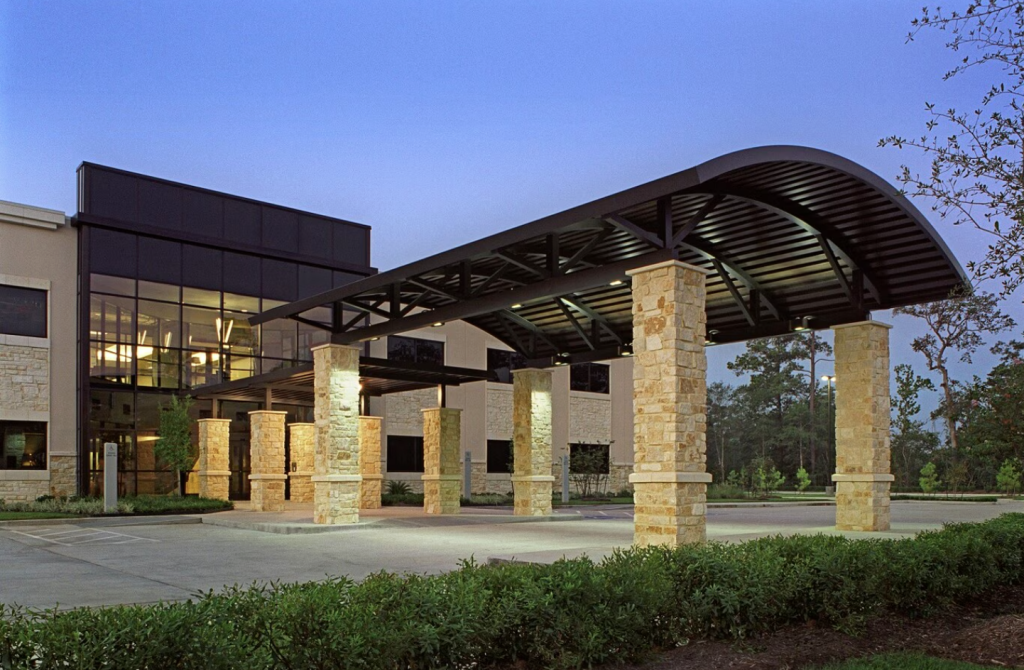
Texas Endovascular - The Woodlands is an outpatient interventional radiology clinic at 8850 Six Pines Drive, Suite 280, The Woodlands, TX 77380, less than half a mile from Memorial Hermann The Woodlands Medical Center. Dr. Ryan Armstrong, a board-certified interventional radiologist, evaluates and treats enlarged prostate (BPH) here with prostate artery embolization (PAE). Consultation, treatment, and follow-up all happen in this clinic.
An enlarged prostate, or benign prostatic hyperplasia (BPH), is a non-cancerous growth of the prostate gland. The prostate sits just below the bladder and wraps around the urethra, the tube that carries urine out of the body. As the gland grows, it squeezes the urethra and makes it harder for urine to flow.
BPH is very common. About half of men over 50 have some degree of it, and the odds rise with each decade. It is not cancer and does not turn into cancer, but symptoms tend to get worse over time and, left untreated, can lead to bladder strain and urinary tract infections.
You don't have to wait for symptoms to become severe. Consider an evaluation if you are:
Sudden inability to urinate, blood in your urine, or fever with urinary pain should be seen the same day.
An enlarged prostate can be managed with medication, minimally invasive procedures such as UroLift implants, or surgery; TURP or prostatectomy. The right choice depends on the size of your prostate, how much your symptoms affect daily life, and your overall health. At The Woodlands clinic, we treat BPH with prostate artery embolization (PAE), which shrinks the prostate by reducing its blood supply. No tissue is removed and there is no surgical incision, and most men go home the same day and return to normal activities within a few days. Compare PAE with other treatments →
PAE usually takes one to three hours, and most men go home the same day with only a small bandage and no urinary catheter. Our physicians have performed more than 40,000 minimally invasive procedures. More about prostate artery embolization →

Outpatient, no hospital stay
No cutting, no tissue removed, and no catheter to take home
Very low risk of erectile dysfunction or retrograde ejaculation
Covered by Medicare and most major insurance plans when medically necessary

Dr. Ryan Armstrong, a board-certified interventional radiologist, sees prostate patients in The Woodlands. Several of our physicians rotate between clinics, so ask when you call if you would like a specific doctor.
The Woodlands clinic offers evaluation for enlarged prostate (BPH) symptoms and prostate artery embolization (PAE). If PAE is not the right fit for you, your physician will explain your other options and can provide a referral.
PAE is a minimally invasive, outpatient procedure that treats an enlarged prostate (BPH) by blocking the small arteries that feed the prostate. An interventional radiologist guides a thin catheter through a pinhole at the wrist or groin, and over the following weeks the prostate softens and shrinks, easing urinary symptoms without cutting, removing tissue, or a hospital stay.
PAE is designed to preserve sexual and urinary function. Because no nerves or tissue are cut, it carries a very low risk of erectile dysfunction or retrograde ejaculation compared with prostate surgery. Many men say their quality of life improves after the procedure.
PAE is often a good fit for men with moderate to severe urinary symptoms from an enlarged prostate, especially if medication hasn't helped or causes side effects, if you would rather avoid surgery, or if surgery carries a higher risk for you, for example because you take blood thinners. It also works well for larger prostates. A consultation confirms whether PAE is right for you. Take the 2-minute quiz →
TURP is surgery that removes prostate tissue through the urethra, usually under general or spinal anesthesia, with two to four weeks of recovery. UroLift places small implants to hold the prostate open and is limited by prostate size. PAE shrinks the prostate from the inside through a single pinhole under light sedation, with no tissue removed, a recovery of a few days, and a very low risk of sexual side effects. Compare PAE with other treatments →
Most men go home the same day and are back to normal activities within a few days to a week. Recovery can take a little longer for men with other health conditions, such as diabetes or heart disease, and your physician will follow your progress.
Relief builds gradually as the prostate shrinks over the weeks after treatment. In published studies, urinary symptom scores dropped by about 65 to 70 percent after PAE, and relief has lasted two years or more.
When PAE is medically necessary, it is covered by Medicare and most major insurance plans. Our team verifies your benefits and explains what you can expect to pay before your visit is scheduled.
We are at 8850 Six Pines Drive, Suite 280, The Woodlands, TX 77380, less than half a mile from Memorial Hermann The Woodlands Medical Center. Call (713) 489-6857 for directions.
Scheduling
Please contact our dedicated specialists to schedule a consultation today.