Texas Endovascular Logo

281-690-5082 HOUSTON

CLEAR LAKE (WEBSTER), TEXAS

Enlarged prostate treatment in Clear Lake, Texas

Getting up several times a night, a weak stream, and always knowing where the nearest restroom is are common with an enlarged prostate, but surgery is not the only fix. At Texas Endovascular in Clear Lake, our board-certified interventional radiologists treat benign prostatic hyperplasia (BPH) with prostate artery embolization (PAE), a minimally invasive procedure that shrinks the prostate through a single pinhole, with no cutting and no tissue removed.
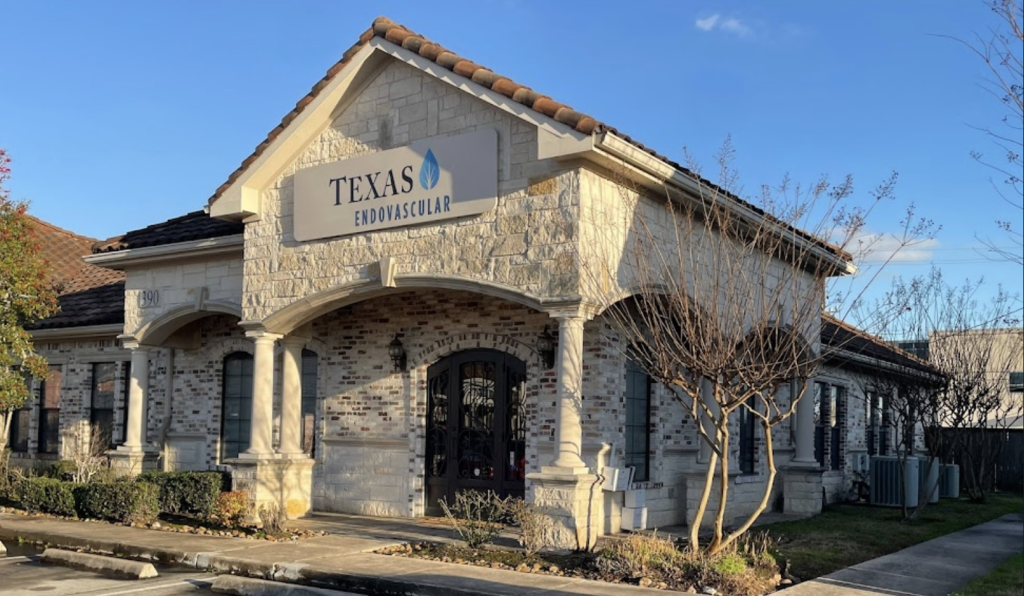
Texas Endovascular - Clear Lake (exterior shot)

390 E Medical Center Blvd, Webster, TX 77598
Get directions ➔

Contact us: 
Phone:
(713) 489-8506
Fax: (713) 575-3688

Office Hours
Monday – Friday: 8am – 5pm
Saturday – Sunday: Closed

About our clear lake clinic

Non-surgical prostate care, serving Clear Lake and nearby communities

at a glance

Texas Endovascular - Clear Lake is an outpatient interventional radiology clinic at 390 East Medical Center Blvd, Webster, TX 77598, less than half a mile from HCA Houston Healthcare Clear Lake. Dr. AJ Valenson, a double board-certified interventional radiologist who sees patients in English and Spanish, evaluates and treats enlarged prostate (BPH) here with prostate artery embolization (PAE). Consultation, treatment, and follow-up all happen in this clinic.

Why patients choose Texas Endovascular for prostate (BPH) care

  • Care led by a board-certified interventional radiologist
  • Treatment through a single pinhole, with no tissue removed
  • Outpatient procedure with no hospital stay
  • Medicare and most major plans accepted, with benefits verified before your visit is scheduled
  • Se habla español: your physician and team members speak Spanish
Board-certified interventional radiologist

Meet Dr. AJ Valenson

Double board-certified, trained at Yale School of Medicine and Rush University Medical Center, and raised in Clear Lake.
Dr. Valenson treats enlarged prostate with PAE at the Clear Lake clinic and talks through every option with patients in English or Spanish. Our other physicians rotate between locations, so if you'd like to see a specific doctor at the Clear Lake clinic, just ask when you call.
"I don't believe in telling my patients what to do, but instead I try to provide them as much information as possible for them to make the best decision that works for them. Sometimes that might mean not treating at all, in which case we will discuss alternative options."
- AJ Valenson, M.D.
ADVANCED BPH TREATMENT IN Clear lake

What is an enlarged prostate (BPH)?

An enlarged prostate, or benign prostatic hyperplasia (BPH), is a non-cancerous growth of the prostate gland. The prostate sits just below the bladder and wraps around the urethra, the tube that carries urine out of the body. As the gland grows, it squeezes the urethra and makes it harder for urine to flow.

BPH is very common. About half of men over 50 have some degree of it, and the odds rise with each decade. It is not cancer and does not turn into cancer, but symptoms tend to get worse over time and, left untreated, can lead to bladder strain and urinary tract infections.

Learn more about BPH →

about bph

Enlarged prostate (BPH) symptoms

Most BPH symptoms affect how you urinate and how well you sleep. Medication can ease them for some men, but it does not shrink the prostate itself. 
Common symptoms include:
  • Urinating more often, day and night
  • Straining to urinate
  • Waking up at night to urinate (nocturia)
  • Dribbling at the end
  • A sudden urge that is hard to control
  • A weak or stop-and-start stream
  • Trouble getting started
  • Feeling that your bladder never fully empties
These symptoms can overlap with infections, bladder stones, and other conditions, so they are worth having evaluated. See all BPH symptoms →

When to see a prostate specialist for your BPH

You don't have to wait for symptoms to become severe. Consider an evaluation if you are:

  • Getting up more than twice a night to urinate
  • Straining to start or finish
  • Feeling like your bladder never fully empties
  • Planning your day around where the restrooms are
  • Still having symptoms on BPH medication, or dealing with side effects you'd rather not live with
  • Facing a recommendation for prostate surgery and wanting to explore other options

Sudden inability to urinate, blood in your urine, or fever with urinary pain should be seen the same day.

bph TREATMENT

Non-surgical enlarged prostate treatment in Clear Lake, Texas

An enlarged prostate can be managed with medication, minimally invasive procedures such as UroLift implants, or surgery such as TURP or prostatectomy. The right choice depends on the size of your prostate, how much your symptoms affect daily life, and your overall health. At our Clear Lake clinic, we treat BPH with prostate artery embolization (PAE), which shrinks the prostate by reducing its blood supply. No tissue is removed and there is no surgical incision, and most men go home the same day and return to normal activities within a few days. Compare PAE with other treatments →

How PAE works
  1. Confirm the diagnosis. A consultation and evaluation confirm that an enlarged prostate is causing your symptoms and that PAE is a good fit.
  2. Reach the arteries through a pinhole. Under light sedation, a thin microcatheter is guided from the wrist or groin to the prostate arteries using live X-ray imaging.
  3. Reduce the blood supply. Tiny microspheres are released to block the small arteries feeding the prostate. Both sides are treated through the same access point.
  4. Let the prostate shrink. Over the following weeks, the prostate softens and shrinks, easing pressure on the urethra, and urinary symptoms steadily improve.

PAE usually takes one to three hours, and most men go home the same day with only a small bandage and no urinary catheter. Our physicians have performed more than 40,000 minimally invasive procedures. More about prostate artery embolization →

Group photo of Clear Lake team

Benefits of prostate artery embolization (PAE)

Outpatient, no hospital stay


No cutting, no tissue removed, and no catheter to take home


Very low risk of erectile dysfunction or retrograde ejaculation


Covered by Medicare and most major insurance plans when medically necessary

Real patient stories

What patients say about Texas Endovascular

Rated 5 stars by hundreds of Clear Lake PAE patients
Come see us

Visiting our Clear Lake clinic

Our Clear Lake clinic is at 390 East Medical Center Blvd in Webster, about a mile east of the Gulf Freeway (I-45) and less than half a mile from HCA Houston Healthcare Clear Lake. It is convenient for patients in League City, Friendswood, Seabrook, and Pasadena.

Dr. Valenson and members of our team speak Spanish. For patients closer to central Houston, we also treat BPH at our Houston clinic in Bellaire.
Texas Endovascular - Clear Lake FAQs

Common questions about BPH treatment

Who treats enlarged prostate at the Clear Lake clinic?

Dr. AJ Valenson, a double board-certified interventional radiologist and the clinic's lead provider, sees prostate patients in Clear Lake. He is fluent in English and Spanish. Several of our physicians rotate between clinics, so ask when you call if you would like a specific doctor.

Which enlarged prostate treatments are available in Clear Lake?

Our Clear Lake clinic offers evaluation for enlarged prostate (BPH) symptoms and prostate artery embolization (PAE). If PAE is not the right fit for you, your physician will explain your other options and can provide a referral.

What is prostate artery embolization (PAE)?

PAE is a minimally invasive, outpatient procedure that treats an enlarged prostate (BPH) by blocking the small arteries that feed the prostate. An interventional radiologist guides a thin catheter through a pinhole at the wrist or groin, and over the following weeks the prostate softens and shrinks, easing urinary symptoms without cutting, removing tissue, or a hospital stay.

Will PAE affect my sexual function?

PAE is designed to preserve sexual and urinary function. Because no nerves or tissue are cut, it carries a very low risk of erectile dysfunction or retrograde ejaculation compared with prostate surgery. Many men say their quality of life improves after the procedure.

Am I a candidate for PAE?

PAE is often a good fit for men with moderate to severe urinary symptoms from an enlarged prostate, especially if medication hasn't helped or causes side effects, if you would rather avoid surgery, or if surgery carries a higher risk for you, for example because you take blood thinners. It also works well for larger prostates. A consultation confirms whether PAE is right for you. Take the 2-minute quiz →

How is PAE different from TURP or UroLift?

TURP is surgery that removes prostate tissue through the urethra, usually under general or spinal anesthesia, with two to four weeks of recovery. UroLift places small implants to hold the prostate open and is limited by prostate size. PAE shrinks the prostate from the inside through a single pinhole under light sedation, with no tissue removed, a recovery of a few days, and a very low risk of sexual side effects. Compare PAE with other treatments →

How long is recovery after PAE?

Most men go home the same day and are back to normal activities within a few days to a week. Recovery can take a little longer for men with other health conditions, such as diabetes or heart disease, and your physician will follow your progress.

How soon will my symptoms improve after PAE?

Relief builds gradually as the prostate shrinks over the weeks after treatment. In published studies, urinary symptom scores dropped by about 65 to 70 percent after PAE, and relief has lasted two years or more.

Does insurance cover PAE?

When PAE is medically necessary, it is covered by Medicare and most major insurance plans. Our team verifies your benefits and explains what you can expect to pay before your visit is scheduled.

Where is the Clear Lake clinic?

We are at 390 East Medical Center Blvd, Webster, TX 77598, about a mile east of the Gulf Freeway (I-45) and less than half a mile from HCA Houston Healthcare Clear Lake. Call (713) 489-8506 for directions.

Additional CONDITIONS WE TREAT

Conditions we treat at our Clear Lake clinic

Every condition below is treated the same way, with a catheter guided through a pinhole in the wrist or groin. Not a different specialist for each one. 
One specialty, no large incisions, no hospital stay, and most patients return to normal activity within days.
stay up to date | Subscribe to our Newsletter

New treatments, plain-language answers, once a month

Our physicians write about the conditions we treat and the procedures that replace surgery; what is new, what the evidence says, and what it means for you. One email a month. Unsubscribe any time, and we never share your address.
Are you a referring physician?
Send imaging and clinical notes, get a same-week consult for your patient, and receive a written summary at one week, one month and four months. Your patient's routine care stays with you.
Schedule Now