Houston Fibroids now part of Texas EVA

281-690-5082 HOUSTON

joint care in Houston & Dallas–Fort Worth

Golfer's elbow treatment. Relief without surgery

Transarterial Elbow Embolization (TAE) is a minimally invasive, image-guided procedure for chronic golfer's elbow that has not responded to rest, bracing, therapy, or injections. It reduces the abnormal blood flow feeding inflammation around the inflamed tendon on the inside of the elbow.
  • No surgery, no general anesthesia
  • Covered by most insurance

Minimally
invasive

image-guided procedure,
no incision on the elbow

Same-day,
outpatient

with local anesthesia
and light sedation

Back to light activity
the next day

strenuous activity and
sports around two weeks

Board-certified / Fellowship-trained

Interventional radiologists across Houston & DFW

About Golfer's Elbow

What is golfer's elbow (medial epicondylitis)?

Golfer's elbow, or medial epicondylitis, is pain and inflammation in the tendons that attach your forearm muscles to the bony bump on the inside of your elbow. Repetitive gripping, wrist flexion, and forearm rotation strain those tendons, causing inner-elbow pain that can radiate into the forearm and hand.

It is a common overuse injury. Golfer's elbow affects roughly 0.4 percent of the general population, with higher rates among adults aged 45 to 64, women, and people whose jobs involve repetitive, forceful arm movements (National Center for Biotechnology Information). As the strain becomes chronic, the body grows clusters of tiny abnormal blood vessels around the inflamed tendon. Those vessels keep feeding the inflammation and pain long after the original injury. This is the cycle TAE is designed to break.
SYMPTOMS

What are the symptoms 
of golfer's elbow?

Golfer's elbow usually announces itself as pain and tenderness on the inner side of the elbow that flares with gripping, lifting, or twisting — swinging a club, shaking hands, or turning a doorknob. If elbow pain has lasted more than three months and hasn't responded to rest, bracing, or therapy, it's time to get evaluated.
Do I have golfer's elbow? Take the quiz!
  • Pain and tenderness
    on the inner elbowl
  • Stiffness in the elbow
  • Tingling or numbness
    in the ring and little fingers
  • Pain that worsens
    with gripping or lifting
  • Weakness in the
    hand and wrist
  • Symptoms lasting
    several months
Progression & Timing

Why treat golfer's elbow early?

Golfer's elbow often responds to conservative care in its early stages. The longer it lasts, the more likely abnormal vessels keep the inflammation going, which is where TAE becomes an option.

1. Acute

Recent pain that usually responds to rest, ice, bracing, and activity changes, often within weeks.

2. Persistent

Pain that lingers for months and returns whenever you use the arm, despite conservative care.

3. Chronic (tendinosis)

pain lasting six months+, with abnormal vessels feeding the inflammation. This is the point where TAE is most valuable.

Causes & Risk Factors

What causes golfer's elbow
and who is at risk?

According to Cleveland Clinic, golfer’s elbow, also known as medial epicondylitis, occurs when repetitive wrist and arm movements create small strains in the tendons connecting the forearm and elbow, resulting in inflammation and pain on the inside of the elbow.

Golf and racquet sports

Golf with poor technique or equipment, tennis, and pickleball.

Repetitive tool and manual work

Hammering, wrenching, shoveling, raking, and using chainsaws.

Throwing and weight training

Baseball, softball, football, javelin, and repetitive lifting.

Occupational and hobby strain

Carpentry, construction, plumbing, painting, assembly lines, typing, and knitting.

Age and other factors

Risk rises with age, especially 45 to 64, and is higher in women.

Chronic inflammation

Abnormal vessels that build over time and keep the tendon inflamed.

your options

How is golfer's elbow treated?

Treatment starts by resting the tendon and taking strain off the inner elbow. Most people improve with conservative care. TAE offers a minimally invasive option when those measures fall short, before surgery.

Rest, ice & bracing

Activity changes and a brace to reduce strain on the tendon.

Physical therapy & eccentric exercise

Stretching and strengthening to restore mobility and promote healing.

NSAIDs & steroid injections

Short-term pain and inflammation relief.

PRP injections

Platelet-rich plasma aimed at supporting tendon healing.

Tendon release surgery

An open procedure reserved for severe cases when other treatments fail.

WHAT WE DO

Transarterial Elbow Embolization (TAE)

A minimally invasive, image-guided option for chronic golfer's elbow that has not responded to conservative care. It reduces the abnormal blood flow driving inflammation — without surgery on the elbow.

See if you're a candidate!

MEET YOUR DOCTORS

TAE specialists across Houston & Dallas-Fort Worth

Together, our doctors have performed tens of thousands of minimally invasive vascular and joint procedures across both metros.
Portrait of Eric Hardee

Dr. Eric Hardee

Co-Founder · Interventional Radiologist
Co-founder of Texas Endovascular and a board-certified interventional radiologist serving the Houston and Katy areas. Specializes in UFE, PAD, and vein disease.
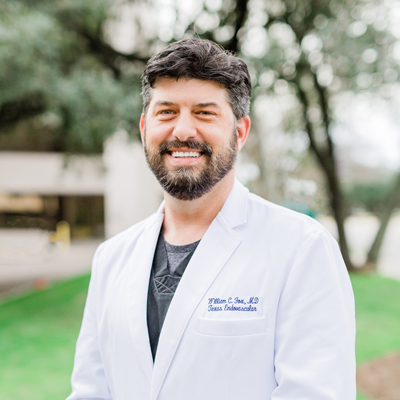
Portrait of Dr Fox

Dr. William Fox

Co-Founder · Interventional Radiologist
Board-certified interventional radiologist and co-founder of Texas Endovascular, serving Central Houston. Specializes in fibroid embolization, vein disease, and PAD.
Dr. Jay Patel, M.D.

Dr. Jay Patel

Dallas-Fort Worth Interventional Radiologist
Board-certified interventional radiologist leading fibroid care at the Dallas and Plano clinics, offering UFE for women throughout the DFW metroplex.
Ryan Armstrong

Dr. Ryan Armstrong

Interventional Radiologist
Board-certified interventional radiologist providing advanced, minimally invasive care across Greater Houston — uterine fibroids, vein disease, PAD, and joint conditions.

Dr. AJ Valenson

Interventional Radiologist · Bilingual (EN/ES)
Board-certified interventional radiologist and lead provider at the Clear Lake (Webster) clinic. Fluent in English and Spanish, serving the Houston Bay Area.
the TAE procedure

How does Transarterial Elbow Embolization (TAE) work?

Rather than operating on the elbow, TAE targets the abnormal blood vessels that fuel chronic tendon inflammation. Reducing that blood flow calms the inflammation and eases inner-elbow pain, with no incision on the elbow, no general anesthesia, and minimal downtime.
The procedure, step by step
  1. A tiny catheter is guided to the arteries supplying your elbow through a pinhole in the wrist or groin — with local numbing and light sedation.
  2. Microscopic particles reduce blood supply to the abnormal vessels (neovascularization) feeding inflammation around the medial epicondyle — healthy circulation is untouched.
  3. The "fire" of inflammation is gradually dampened over the following weeks — elbow pain eases and most patients return to their normal activity with a short course of therapy.
The procedure typically takes under an hour, and you go home the same day with a small bandage. Most patients resume light activity right away, and pain relief builds over the first weeks to months as inflammation resolves.

Outpatient, same-day

No hospital stay. You go home within an hour or two.

No surgery on the elbow

A single pinhole — no scalpel, no general anesthesia, lower risk of infection or nerve injury than surgery.

Minimal downtime

Most patients resume light activity right away and return to routine within a day or two — no cast, no sling.

Covered by most insurance

We verify your benefits in advance and explain costs clearly.

Are you a candidate for TAE?
Take our 60-second quiz to find out whether this non-surgical option may be right for your elbow pain.
Compare your options

TAE vs. steroid injections vs. surgery

Golfer's elbow embolization offers a modern alternative when conservative treatments haven't worked — here's how it compares, at a glance.
TreatmentInvasivenessAnesthesiaRecovery/RehabDurability of relief
Transarterial Elbow Embolization (TAE)  WHAT WE DOMinimally invasive (pinhole)Local + light sedationMinimal; light activity same dayDurable (treats the source)
Steroid injectionsNon-surgical (injection)LocalSame dayWeeks–months (masks symptoms)
Bracing, therapy + NSAIDsNon-invasiveNoneOngoing (months)Helpful; slow while inflammation persists
PRP injectionsNon-surgical (injection)LocalDays to weeksVariable; inconsistent response
Tendon release surgerySurgicalGeneral/regionalWeeks of rehabilitationHigh (higher risk of infection / nerve injury)
WHY TEXAS ENDOVASCULAR

Why choose Texas Endovascular
for your golfer's elbow care

Personalized, patient-focused care for chronic inner-elbow pain, focused on relief, restored function, and getting you back to your activities.

Specialists for elbow embolization

Board-certified interventional radiologists trained in TAE.

Advanced precision guidance

Image-guided targeting of the abnormal vessels, not the healthy tendon.

Convenient locations across Texas

Clinics throughout Greater Houston and Dallas-Fort Worth.

Real patient stories

What patients say about 
joint care at Texas Endovascular

Rated 5 stars by hundreds of Houston and Dallas patients
"I couldn't take my first steps in the morning without wincing. A few weeks after the procedure, that stabbing heel pain was gone."
Denise R.
"My podiatrist said surgery was next. Embolization got me back on my feet — no incision, no long recovery on crutches."
Marcus T.
"Steroid shots only helped for a few weeks at a time. This finally treated the cause — I'm back to my morning runs."
Lourdes G.
"In and out the same day with a small bandage. I wish I'd known about this option before living with heel pain for two years."
Sandra K.
Convenient to you

Where can I get TAE in Houston & Dallas?

TAE is an innovative procedure offered at select Texas Endovascular clinics across Greater Houston and Dallas-Fort Worth, delivered by board-certified interventional radiologists.

Houston

4747 Bellaire Blvd,
Suite 550
Bellaire, TX 77401
Schedule here

Katy

1331 West Grand Parkway
N, Suite 210
Katy, TX 77493

Schedule here

Sugar Land

7619 Branford Place
Suite 230
Sugar Land, TX 77479
Schedule here

The Woodlands

8850 Six Pines Drive,
Suite 280
The Woodlands, TX 77380
Schedule here

Clear Lake

390 East Medical Center Blvd
Webster, TX 77598
Schedule here

Dallas

3920 W Wheatland Rd
Suite 108
Dallas, TX 75237

Schedule here

Plano

5425 W. Spring Creek Parkway
Suite 100
Plano, TX 75024

Schedule here

Fort Worth

6620 Bryant Irvin Road
Suite 100
Fort Worth, TX 76132

Schedule here
Questions

Golfer's elbow embolization FAQs

Still unsure? Our Houston and Dallas teams are happy to answer your questions over the phone.
Am I a Candidate? Take the quiz281.690.5082469.343.0265

What is Transarterial Elbow Embolization (TAE)?

TAE is a minimally invasive, image-guided procedure that reduces the abnormal blood flow around an inflamed elbow tendon. Using advanced imaging, an interventional radiologist threads a tiny catheter to the arteries near the elbow and places microscopic particles that calm the inflammation driving chronic golfer's elbow pain.

Does embolization work for golfer's elbow?

Studies of TAE for chronic medial epicondylitis that has not responded to conservative care report meaningful pain relief and improved function, with a low rate of complications. The evidence is early and based on small studies, so your interventional radiologist will confirm whether you are a good candidate.

Who is a good candidate for TAE?

You may be a candidate if you have had inner-elbow pain for six months or more and rest, bracing, therapy, and injections have not worked. TAE is designed for chronic golfer's elbow driven by abnormal vessels, which imaging can confirm.

How is TAE different from golfer's elbow surgery?

TAE requires no incision on the elbow and no open tendon repair. It is done through a pinhole in the wrist or groin as a same-day outpatient procedure, with a faster return to activity than open surgery.

Is TAE painful, and what is recovery like?

Most patients go home the same day and return to light activity the next day. Strenuous activity and sports are usually possible around two weeks. Pain tends to ease over the first few weeks, with function improving over the following months.

How long does the TAE procedure take?

TAE is an outpatient procedure. Confirm the typical duration with your care team, since it varies by case.

Does insurance cover TAE for golfer's elbow?

Insurance can vary. Our team reviews your benefits and explains any costs before anything is scheduled.

Can golfer's elbow go away on its own?

Yes. Mild to moderate golfer's elbow can improve with rest, ice, activity changes, and over-the-counter anti-inflammatories. Severe or lasting cases usually need medical care.

When should I see a doctor for elbow pain?

See a provider if the pain worsens despite rest and self-care, interferes with daily activities, or keeps you from your usual sports or hobbies.

FROM OUR DOCTORS

Learn about joint care from the specialists who treat it

Our physicians break down the questions patients ask most, in plain language, without the medical jargon.