Texas Endovascular Logo

281-690-5082 HOUSTON

plano, texas

Knee pain treatment in Plano, Texas

Knee osteoarthritis pain that hasn't improved with injections, medication, or physical therapy doesn't always mean knee replacement is the next step. At Texas Endovascular in Plano, our board-certified interventional radiologists offer genicular artery embolization (GAE), an outpatient procedure that calms the inflammation behind arthritis pain, with no incision on the knee and no general anesthesia.
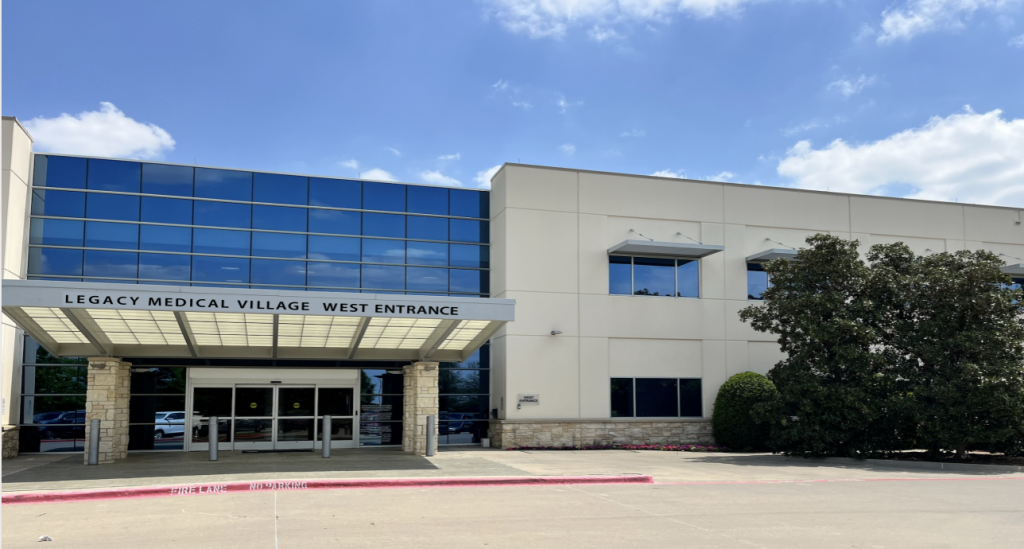
Texas Endovascular - Plano (exterior)

5425 W. Spring Creek Parkway, Suite 100, Plano, TX 75024
Get directions ➔

Contact us: 
Phone:
(469) 225-3505
Fax: (713) 575-3688

Office Hours
Monday – Friday: 8am – 5pm
Saturday – Sunday: Closed

About our plano clinic

Knee pain care close to home in Plano

at a glance

Texas Endovascular, and its sister brand Texas Knee Institute, treats knee pain at our Plano clinic, an outpatient interventional radiology clinic at 5425 W. Spring Creek Parkway, Suite 100, Plano, TX 75024, about a mile west of Preston Road.

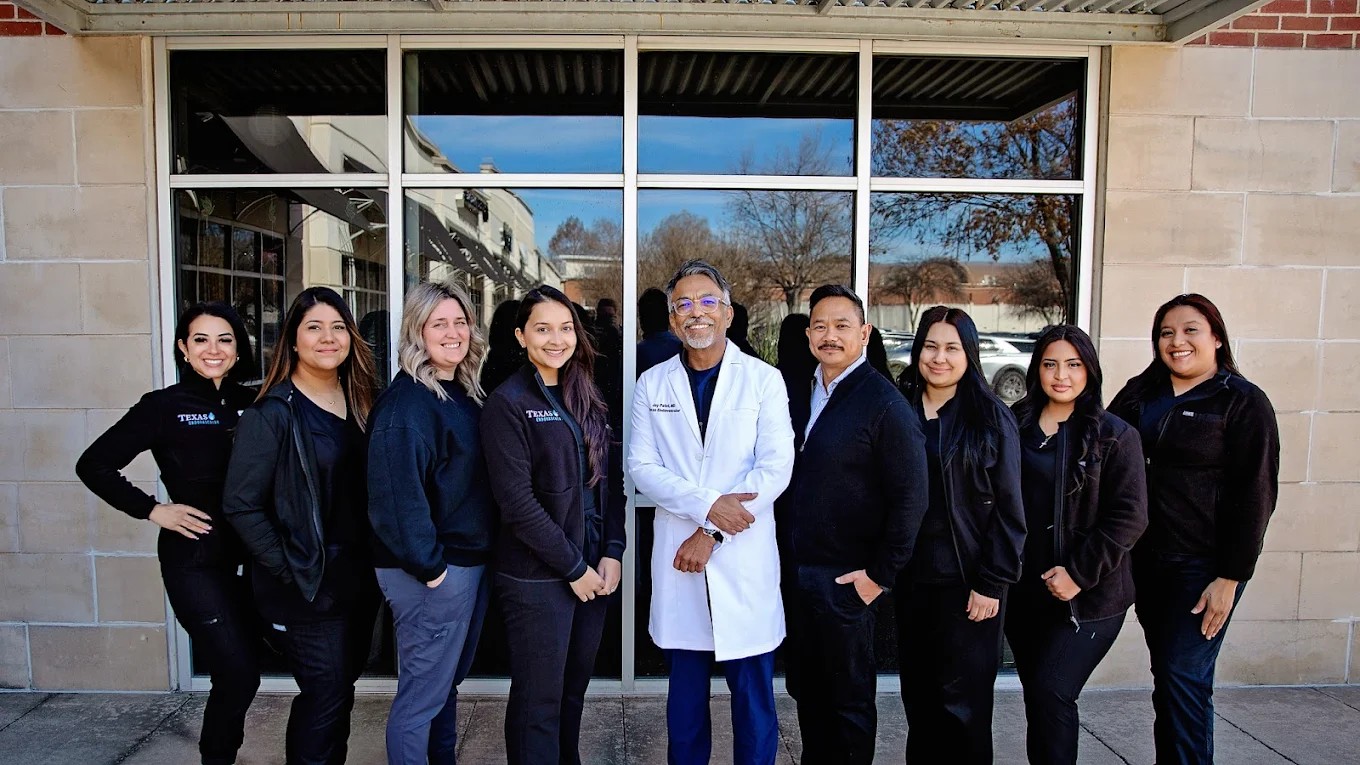
Dr. Jay Patel, a double board-certified interventional radiologist, treats knee osteoarthritis pain here with genicular artery embolization (GAE), a minimally invasive option for patients who want to avoid or delay knee replacement.

Why patients choose our Plano clinic for knee pain treatment

  • Care led by a board-certified interventional radiologist
  • A review of your X-rays or MRI and a clear plan before any procedure
  • Outpatient GAE with no incision on the knee
  • Insurance benefits verified and costs explained before your procedure is scheduled
  • Spanish-speaking team members available
Board-certified interventional radiologist

Meet Dr. Jay Patel

A seven-time D Magazine Best Doctor (2018 to 2026) with more than 20 years in interventional radiology.
In Plano, Dr. Patel sees patients with frozen shoulder, tennis or golfer's elbow, plantar fasciitis, and knee arthritis whose pain hasn't responded to conservative care. Ask which days he is at the Plano clinic.
Dr. Jay Patel named a D Magazine Best Doctor 2026

“My philosophy is simple: understand the patient, understand the problem, and recommend the least invasive treatment that can provide the best result. Sometimes that means a procedure, and sometimes it doesn’t.”

Knee pain treatment in plano

What is genicular artery embolization?

Knee osteoarthritis is the gradual wear of the cartilage that cushions your knee. As it progresses, the joint lining (synovium) becomes inflamed and grows abnormal blood vessels that keep the pain going. 

Genicular artery embolization (GAE) is an outpatient, image-guided procedure that reduces blood flow to those abnormal vessels, calming the inflammation and easing pain. It doesn't cut into or replace any part of the knee, and it doesn't rebuild cartilage. Learn more about knee osteoarthritis →

ABOUT KNEE OSTEOARTHRITIS

Knee OA symptoms

Knee arthritis usually builds slowly. Common symptoms include:
  • Pain that gets worse with walking, stairs, or standing
  • Stiffness in the morning or after sitting
  • Swelling around the knee
  • Grinding, clicking, or creaking when you bend the knee
  • Range of motion loss
  • Pain that disrupts your sleep

Is GAE right for you?

GAE is usually considered when you have:

  • Knee osteoarthritis confirmed by an exam and X-ray or MRI
  • Moderate to severe knee pain that hasn't improved with medication, injections, or physical therapy
  • Mild to moderate arthritis, rather than near-total cartilage loss
  • A wish to avoid or delay knee replacement, or you are not a candidate for surgery

Sudden, severe knee swelling, redness, warmth, or fever, or being unable to put weight on your leg, can signal an infection or injury rather than arthritis and needs prompt medical care.
Request an Appointment
gae treatment

GAE treatment in Plano, Texas

  1. Map the knee arteries. Contrast dye and live X-ray imaging show the small arteries feeding the inflamed knee lining.
  2. Enter through a pinhole. After local numbing, a thin catheter is placed in an artery in the groin or ankle and guided to the knee.
  3. Reduce abnormal blood flow. Microscopic particles are released into the abnormal vessels, while healthy circulation to the knee is preserved.
  4. Walk out the same day. The procedure usually takes one to two hours. Most patients walk within a few hours, go home the same day, and return to typical activities the next day.
Pain relief typically begins within four to six weeks and keeps improving over several months. Learn more about GAE →

Benefits of GAE

Outpatient, home the same day


No incision on the knee and no general anesthesia


Typical activities the next day, with no physical therapy required


Can be repeated if pain returns

How GAE compares with other treatments

  • Physical therapy and medication: often tried first, and helpful for managing symptoms.
  • Steroid injections: quick, but relief usually lasts weeks to months.
  • Knee replacement: a long-term option for advanced arthritis, but it is major surgery with general anesthesia and weeks to months of recovery.
  • Genicular artery embolization (GAE): outpatient, with local numbing and typical activities the next day. Best suited to mild to moderate arthritis.

In a 2024 study presented at the Radiological Society of North America (RSNA) annual meeting, patients' pain scores improved by 71% and quality-of-life scores by 87% one year after GAE.

Real patient stories

What patients say about Texas Endovascular

Rated 5 stars by hundreds of Plano patients
Come see us

Visiting our Plano clinic for Knee OA treatment

The Plano clinic is at 5425 W. Spring Creek Parkway, Suite 100, in west Plano about a mile west of Preston Road, and an easy drive from Frisco, Allen, The Colony, and North Dallas. Dr. Patel also offers GAE at our Dallas clinic, so you are able to schedule a the location that works best for you. 
Texas Endovascular - plano FAQs

Common questions about GAE in Plano

Who performs GAE at the Plano clinic?

Dr. Jay Patel, a double board-certified interventional radiologist, treats knee pain patients in Plano. He also sees patients in Dallas, so ask when you call which days he is at each clinic.

Is GAE available at the Plano clinic?

Yes. The Plano clinic evaluates knee osteoarthritis pain and offers GAE. Your physician reviews your X-rays or MRI and the treatments you've already tried before recommending it.

What is genicular artery embolization (GAE)?

GAE is an outpatient, image-guided procedure for knee osteoarthritis pain. A thin catheter is used to place microscopic particles in the small arteries feeding the inflamed knee lining, which reduces abnormal blood flow and calms the inflammation behind the pain. It does not cut into the knee or rebuild cartilage.

Who is a good candidate for GAE?

Good candidates have knee osteoarthritis confirmed by exam and X-ray or MRI, moderate to severe pain that hasn't improved with medication, injections, or physical therapy, and mild to moderate arthritis rather than near-total cartilage loss. Many want to avoid or delay knee replacement, or are not surgical candidates. Not sure if you're a candidate? Take our short quiz to find out. 

How is GAE different from a knee replacement?

Knee replacement is surgery that removes and replaces damaged parts of the joint, with general anesthesia and weeks to months of recovery. GAE is done through a small puncture with local numbing, with no incision on the knee, and most patients go home the same day. GAE treats pain from inflammation; it does not repair the joint itself.

What happens during GAE?

You stay awake with local numbing. Through a small puncture in the groin or ankle, your physician guides a thin catheter to the arteries around the knee using live X-ray imaging, then releases microscopic particles to reduce blood flow to the inflamed lining. The procedure usually takes one to two hours.

What is recovery like after GAE?

Most patients walk within a few hours, go home the same day, and return to typical activities the next day. Physical therapy is not required. Mild bruising or soreness near the puncture site or knee usually fades within a few weeks.

When will I feel results, and how long do they last?

Pain relief typically begins within four to six weeks and keeps improving over several months. In published studies, many patients report relief lasting two years or longer, and GAE can be repeated if pain returns.

Does insurance cover GAE?

Medicare and most major insurance plans cover GAE when it is medically necessary. Our team verifies your benefits, handles prior authorization, and explains what you can expect to pay before your procedure is scheduled.

Do I need a referral?

No. You can schedule a consultation at our Plano clinic without a physician referral. Call (469) 225-3505 or request an appointment online, and our team will verify your insurance benefits before your visit.

Where is the Plano clinic?

Additional CONDITIONS WE TREAT

Conditions we treat at our Plano clinic

Every condition below is treated the same way, with a catheter guided through a pinhole in the wrist, groin, or ankle. Not a different specialist for each one. One specialty, no large incisions, no hospital stay, and most patients return to normal activity within days.
stay up to date | Subscribe to our Newsletter

New treatments, plain-language answers, once a month

Our physicians write about the conditions we treat and the procedures that replace surgery; what is new, what the evidence says, and what it means for you. One email a month. Unsubscribe any time, and we never share your address.
Are you a referring physician?
Send imaging and clinical notes, get a same-week consult for your patient, and receive a written summary at one week, one month and four months. Your patient's routine care stays with you.
Schedule Now