713-496-0785 HOUSTON
469-333-2630 DALLAS

713-496-0785 HOUSTON
469-333-2630 DALLAS
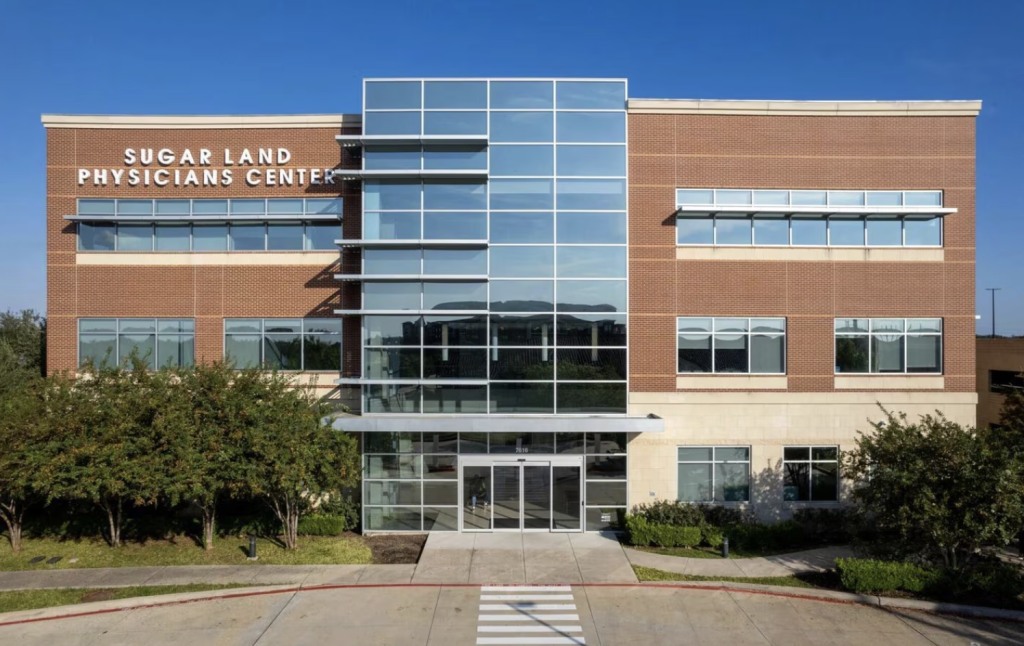
7619 Branford Pl #230, Sugar Land, TX 77479
Get directions ➔
Contact us:
Phone: (713) 489-6746
Fax: (713) 575-3688
Office Hours
Monday – Friday: 8am – 5pm
Saturday – Sunday: Closed
Texas Endovascular - Sugar Land is an outpatient interventional radiology clinic at 7619 Branford Place, Suite 230, Sugar Land, TX 77479, less than a mile from Houston Methodist Sugar Land Hospital. Dr. Ryan Armstrong, a board-certified interventional radiologist, evaluates and treats internal hemorrhoids here with hemorrhoid artery embolization (HAE). Consultation, treatment, and follow-up all happen in this clinic.
Hemorrhoids are swollen veins in the lower rectum and around the anus. They develop when pressure from straining, chronic constipation, prolonged sitting, or pregnancy causes these blood vessels to enlarge and stay swollen.
Internal hemorrhoids form inside the rectum and often cause painless bleeding during bowel movements, along with a feeling of fullness or pressure. External hemorrhoids form under the skin around the anus and tend to cause pain, itching, and swelling.
Hemorrhoids are common and very treatable, even though many people put off care out of embarrassment.
If symptoms continue despite fiber, fluids, and over-the-counter treatments, it may be time for an evaluation. Consider seeing a hemorrhoid specialist if you have:
Heavy rectal bleeding, black or tarry stools, or bleeding with dizziness or weakness needs prompt medical attention.
Hemorrhoids can be managed with diet and lifestyle changes, creams, rubber band ligation, or surgery such as hemorrhoidectomy. The right choice depends on the type and grade of your hemorrhoids and how much they affect daily life. At our Sugar Land clinic, we treat chronic internal hemorrhoids with hemorrhoid artery embolization (HAE), which shrinks hemorrhoids by reducing the blood flow that keeps them swollen. Nothing is inserted into the rectum, and most patients go home the same day and return to normal activities within a few days. Compare HAE with other treatments →
HAE usually takes about an hour, and most patients go home the same day with only a small bandage. Our physicians have performed more than 40,000 minimally invasive procedures. More about hemorrhoid artery embolization →

Outpatient, no hospital stay
No cutting, no tissue removed, and nothing placed in the rectum
Covered by Medicare and most major insurance plans when medically necessary

Dr. Ryan Armstrong, a board-certified interventional radiologist, sees hemorrhoid patients in Sugar Land. Several of our physicians rotate between clinics, so ask when you call if you would like a specific doctor.
Our Sugar Land clinic offers evaluation for hemorrhoid symptoms and hemorrhoid artery embolization (HAE) for chronic internal hemorrhoids. We do not treat external or grade 4 hemorrhoids, but if you have them, your physician can recommend next steps and provide a referral.
HAE is performed under light sedation and involves no incision in or around the anus, so most patients report little to no pain. You may feel mild pelvic discomfort for a day or two afterward.
HAE is designed for chronic, symptomatic internal hemorrhoids, most often grade 2 or 3, in patients who want to avoid surgery. It may not be right if you have had colorectal surgery or are allergic to contrast dye or embolic agents. A consultation confirms whether HAE is right for you. Take the 60-second quiz to see if you may be a candidate→
Banding and surgery treat hemorrhoids from the outside, by banding or removing the tissue itself. That can be painful and may mean repeat sessions or weeks of recovery. HAE works from the inside, reducing the blood supply so the hemorrhoids shrink, with no rectal instruments, no cutting, and a recovery measured in days. Compare HAE with other treatments →
Most patients go home the same day and return to normal activities within a few days. Bleeding often improves within the first days to weeks, and swelling and pressure keep easing as the hemorrhoids shrink.
Many patients see significant improvement after HAE, but hemorrhoids can return, especially if chronic constipation or straining continues. A high-fiber diet, plenty of fluids, and healthy bowel habits help lower that risk.
HAE is covered by Medicare and most major insurance plans when medically necessary. Our team verifies your benefits and explains what you can expect to pay before your visit is scheduled.
We are at 7619 Branford Place, Suite 230, Sugar Land, TX 77479, less than a mile from Houston Methodist Sugar Land Hospital. Call (713) 489-6746 for directions.
Scheduling
Please contact our dedicated specialists to schedule a consultation today.