Houston Fibroids now part of Texas EVA

281-690-5082 HOUSTON

Serving Houston & Dallas–Fort Worth

Minimally invasive 
PAD treatment withrelief you can count on

Peripheral artery disease (PAD) can make even walking difficult, but the right treatment can reduce and eliminate your symptoms. Our board-certified doctors restore blood flow with image-guided procedures like angioplasty and stenting, through a tiny incision. No open surgery, no overnight stay, same-day discharge.
  • No hospital stay
  • Same-day, outpatient
  • Covered by most insurance

No overnight stay

Outpatient, minimal recovery

Same-day
discharge

Most patients go home same day

Tiny incision

No large incision or open surgery

Board-certified / Fellowship-trained

Interventional radiologists

treatment

Minimally invasive PAD treatment

Peripheral artery disease can affect your physical well-being, especially if walking has become difficult. The good news is that the right treatment can reduce, and even eliminate, your symptoms.

At Texas Endovascular, we specialize in diagnosing and treating PAD based on your individual needs. Using state-of-the-art, minimally invasive procedures that don't require an overnight hospital stay, our team restores blood flow to your legs, so patients are often discharged the same day, with minimal recovery time.
PAD treatments

Minimally invasive PAD treatments

Treatment is tailored to each patient's unique circumstances. Our image-guided procedures avoid large incisions and open surgery — restoring blood flow with same-day discharge and minimal recovery.

Angioplasty

Opens blocked arteries with a balloon — a tiny balloon-tipped catheter is guided to the narrowed artery and gently inflated to restore blood flow.

Learn more

Stenting

Inserts a metal scaffold to keep the artery open after angioplasty, so blood keeps flowing freely where a vessel tends to re-narrow.

Learn more

Atherectomy

Removes plaque buildup from arteries using a rotating device — ideal for hardened, calcified blockages that resist a balloon alone.

Learn more

Medications

Peripheral artery disease (PAD) management frequently involves taking medications to control symptoms and slow progression of the disease.

Learn more

MEET YOUR DOCTORS

Board-certified PAD specialists in Houston & Dallas

Together, our physicians have performed more than 75,000+ minimally invasive vascular procedures across both metros.
Portrait of Eric Hardee

Dr. Eric Hardee

Co-Founder · Interventional Radiologist
Co-founder of Texas Endovascular and a board-certified interventional radiologist serving the Houston and Katy areas. Specializes in UFE, PAD, and vein disease.
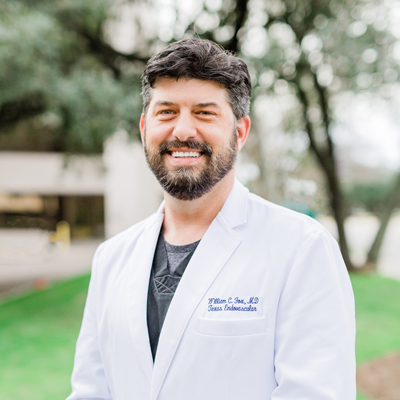
Portrait of Dr Fox

Dr. William Fox

Co-Founder · Interventional Radiologist
Board-certified interventional radiologist and co-founder of Texas Endovascular, serving Central Houston. Specializes in fibroid embolization, vein disease, and PAD.
Dr. Jay Patel, M.D.

Dr. Jay Patel

Dallas-Fort Worth Interventional Radiologist
Board-certified interventional radiologist leading fibroid care at the Dallas and Plano clinics, offering UFE for women throughout the DFW metroplex.

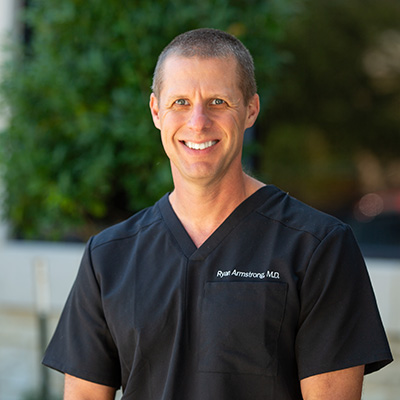
Dr. Ryan Armstrong

Interventional Radiologist
Board-certified interventional radiologist providing advanced, minimally invasive care across Greater Houston — uterine fibroids, vein disease, PAD, and joint conditions.

Dr. AJ Valenson

Interventional Radiologist · Bilingual (EN/ES)
Board-certified interventional radiologist and lead provider at the Clear Lake (Webster) clinic. Fluent in English and Spanish, serving the Houston Bay Area.
The procedure

What to expect during treatment

Your procedure is image-guided and done through a tiny access point; no large incision, no open surgery. Treatment style is selected based on your unique circumstances.
Your procedure step-by-step
  1. A small IV and wire are inserted through the groin under local numbing to access a blood vessel.
  2. Using live imaging, the wire is guided into position past the affected artery.
  3. The diseased artery is treated with a balloon to widen the vessel (angioplasty) or a stent to hold it open and increase blood flow.
  4. With no large incision, most patients are discharged the same day with minimal recovery time.

Outpatient, same-day

No hospital stay. You go home the same day.

No large incision

A tiny access point in the groin — no open surgery.

Minimal recovery

Most patients return to normal activity within a day or two.

Covered by most insurance

Medically necessary PAD treatment is covered by most major plans and Medicare.

Ready to find relief?
Take our 60-second quiz to learn whether minimally invasive PAD treatment is right for you.
Before treatment

Diagnosis comes first

Every treatment plan starts with an accurate diagnosis. PAD is usually diagnosed in the office with a quick, painless bedside test, with imaging added only when needed to plan your care.
Ankle-Brachial Index (ABI)

PAD is usually diagnosed in the office with a bedside test called an ankle-brachial index. It uses ultrasound and blood pressure cuffs to evaluate the circulation in your arms and legs — quick, painless, and non-invasive.

Advanced imaging, if needed

If the ABI is abnormal, our specialists may order MRA or CT angiography to determine the extent of the problem and plan your treatment precisely — so the procedure is targeted to exactly the right artery.

Want the full picture? Learn how we screen, test, and diagnose PAD before building your personalized treatment plan.

compare your options

Minimally invasive PAD treatment 
vs. traditional approaches

How modern, image-guided PAD treatment compares with open surgery and conservative management, at a glance.
TreatmentInvasivenessRecovery timeAnesthesiaEffectiveness
Angioplasty & stenting WHAT WE DOMinimally invasiveNext dayLocal onlyHigh
AtherectomyMinimally invasiveNext dayLocal onlyHigh
Medication & lifestyleNon-invasiveOngoingNoneGood (early stage)
Open bypass surgerySurgical4-8 weeksGeneralHigh
Doing nothing--NoneRisk of limb loss
Real patient stories

What patients say about PAD 
treatment at Texas Endovascular

Rated 5 stars by hundreds of Houston and Dallas patients
"I couldn't walk to the mailbox without my calf seizing up. One outpatient procedure and I'm back to walking every morning."
Robert M.
"A sore on my foot wasn't healing for months. Dr. Patel found the blockage, reopened the artery, and it finally healed."
Gloria V.
"No hospital, no big surgery — just a pinhole. The cramping that woke me up at night is completely gone."
James W.
"The team explained everything and verified my insurance up front. My feet are warm again and I have my energy back."
Estela R.
Convenient to you

PAD treatment centers across Houston & Dallas

Get treated for PAD by board-certified interventional radiologists at eight convenient clinics across Texas.

Houston

4747 Bellaire Blvd,
Suite 550
Bellaire, TX 77401
Schedule here

Katy

1331 West Grand Parkway
N, Suite 210
Katy, TX 77493

Schedule here

Sugar Land

7619 Branford Place
Suite 230
Sugar Land, TX 77479
Schedule here

The Woodlands

8850 Six Pines Drive,
Suite 280
The Woodlands, TX 77380
Schedule here

Clear Lake

390 East Medical Center Blvd
Webster, TX 77598
Schedule here

Dallas

3920 W Wheatland Rd
Suite 108
Dallas, TX 75237

Schedule here

Plano

5425 W. Spring Creek Parkway
Suite 100
Plano, TX 75024

Schedule here

Fort Worth

6620 Bryant Irvin Road
Suite 100
Fort Worth, TX 76132

Schedule here
Questions

PAD treatment FAQs

Still unsure? Our Houston and Dallas teams are happy to answer your questions over the phone.
Am I a Candidate? Take the quiz281.690.5082469.343.0265

How is PAD treated?

PAD is treated with minimally invasive, image-guided procedures that restore blood flow to the legs. A small IV and wire are inserted through the groin, and the diseased artery is reopened with a balloon (angioplasty) or held open with a stent. Because they avoid large incisions and open surgery, most patients go home the same day.

What treatments do you offer for PAD?

  • Balloon angioplasty — widens the narrowed artery.
  • Stent placement — holds the artery open.
  • Atherectomy — removes plaque from the artery wall.

Early-stage PAD is often managed with medication and lifestyle changes. The right approach is chosen for your circumstances.

Will I need to stay overnight in the hospital?

No. Our PAD treatments are minimally invasive and don't require an overnight hospital stay. Because they avoid large incisions and open surgery, patients are often discharged the same day with minimal recovery time.

What happens during a PAD procedure?

A small IV and wire are inserted through the groin under local numbing. Once a blood vessel is accessed, live imaging guides the wire past the affected artery. The diseased artery is then treated with a balloon to widen it (angioplasty) or a stent to hold it open and increase blood flow.

How is PAD diagnosed before treatment?

PAD is usually diagnosed in the office with an ankle-brachial index (ABI), a bedside test using ultrasound and blood pressure cuffs to evaluate circulation in the arms and legs. If the test is abnormal, imaging such as MRA or CT angiography may be ordered to determine the extent of the problem and plan your treatment.

Is PAD treatment covered by insurance?

Yes. Medically necessary PAD treatment is covered by most major insurance plans and Medicare. Our team verifies your benefits and handles the paperwork before treatment begins, so you'll know what to expect up front.

FROM OUR DOCTORS

Learn about PAD treatment from the specialists who do it

Our physicians break down the questions patients ask most, in plain language, without the medical jargon.
picture