This article was medically authored by Dr. AJ Valenson and last reviewed for accuracy on 07/28/2026.
Visible veins can make you feel self-conscious about wearing shorts, dresses, or swimsuits. However, blue, purple, twisted, or bulging veins are more than just a cosmetic concern. In fact, they can be a sign that blood is not moving efficiently through the veins in your legs, causing spider or varicose veins to form.
In this post, we explain why you develop visible veins, when you should seek medical intervention, along with possible treatment options.
Key Takeaways
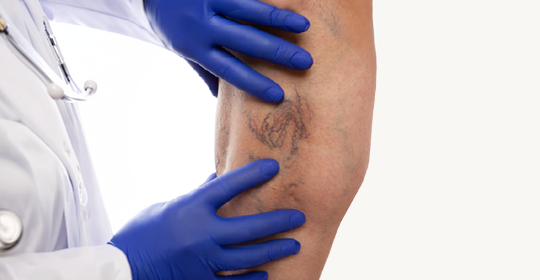
Your veins carry blood back toward the heart. Inside the veins in your legs are small valves that help keep blood moving upward against gravity. When these valves weaken or stop closing properly, blood may flow backward and collect inside your veins. The increased pressure can cause them to enlarge, twist, and/or become more noticeable beneath the surface of your skin.
Two common types of visible veins are:
Both spider veins and varicose veins are a form of vein disease. They should be addressed to prevent progression, worsening symptoms, and potential complications.
When you have visible veins, you may also experience symptoms of vein disease, including:
Untreated vein disease may worsen, detracting from your quality of life and increasing your risk for skin changes, blood clots, or venous ulcers.
Long-term pressure inside unhealthy veins can eventually affect the surrounding skin and tissue. You should see a healthcare provider if you notice:
Ignoring these symptoms or delaying vein treatment can lead to ulcers, inflammation, bleeding, or blood clots. A discolored area near the ankle may occasionally develop before a venous ulcer appears.
Seeking care before advanced skin changes develop can prevent complications and help you maintain your active lifestyle.
When you come into one of our seven Texas Endovascular locations, we can provide a vein evaluation that includes a discussion of your symptoms, medical history, and daily activities. We will also examine the affected areas and may perform a diagnostic ultrasound.
With an ultrasound, we can examine your blood flow and identify veins with malfunctioning valves. This information will help us craft your ideal treatment plan.
Many patients still assume that treating varicose veins requires hospitalization, large incisions, or traditional vein-stripping surgery. But, today, we can treat vein disease with minimally invasive, image-guided techniques performed in an outpatient setting.
Depending on the severity of disease, treatment options include:
Once an unhealthy vein is closed, blood naturally reroutes through healthier veins. Most procedures last between 15 and 45 minutes, and patients are generally able to walk immediately afterward, resuming light activities on the same or next day. The appropriate procedure and recovery plan we recommend will depend on your unique circumstances, and will be reviewed following a thorough evaluation.
Right now, your visible veins may be nothing more than a cosmetic concern. But vein disease is a progressive condition. So, left untreated, those visible veins can lead to symptoms that cause pain, bleeding and disruption to your daily life. To avoid these complications, we invite you to learn more about your vein treatment options by requesting an appointment at one of our seven Texas Endovascular locations in the greater Houston and Dallas regions. A professional evaluation can help you understand what’s causing your visible veins and identify an appropriate path toward healthier, more comfortable legs.
Scheduling
Please contact our dedicated specialists to schedule a consultation today.