281-690-5082 HOUSTON
469-225-3505 DALLAS

281-690-5082 HOUSTON
469-225-3505 DALLAS
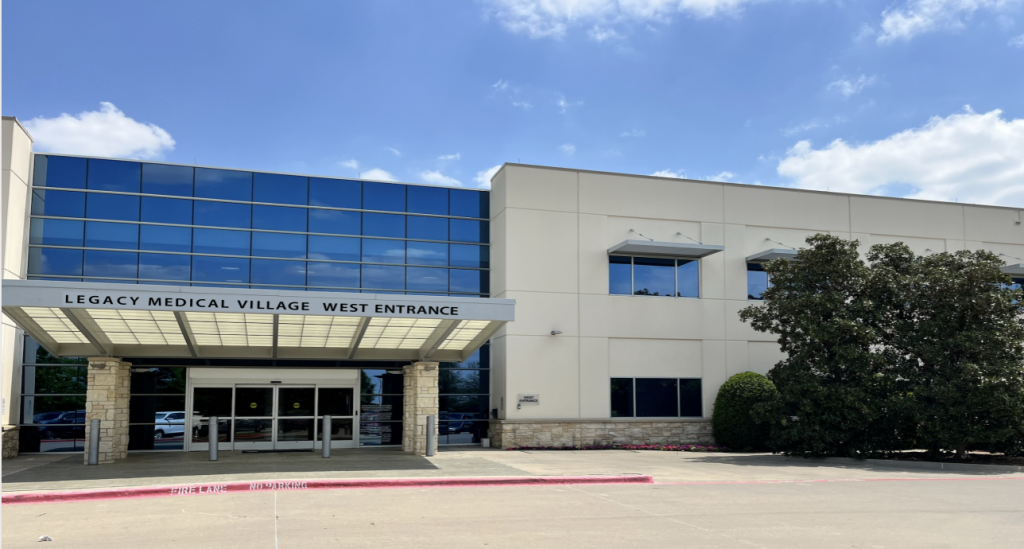
5425 W. Spring Creek Parkway, Suite 100, Plano, TX 75024
Get directions ➔
Contact us:
Phone: (469) 225-3505
Fax: (713) 575-3688
Office Hours
Monday – Friday: 8am – 5pm
Saturday – Sunday: Closed
Texas Endovascular - Plano is an outpatient interventional radiology clinic at 5425 W. Spring Creek Parkway, Suite 100, Plano, TX 75024, about a mile west of Preston Road. Dr. Jay Patel, a double board-certified interventional radiologist, treats chronic joint and tendon pain here with image-guided embolization, including knee osteoarthritis, frozen shoulder, plantar fasciitis, and tennis and golfer's elbow.
“My philosophy is simple: understand the patient, understand the problem, and recommend the least invasive treatment that can provide the best result. Sometimes that means a procedure, and sometimes it doesn’t.”
Chronic joint and tendon pain is often kept going by inflammation fed by small, abnormal blood vessels that grow in the irritated tissue. Joint embolization is an outpatient, image-guided procedure that reduces blood flow to those vessels so the inflammation can settle and the pain can ease.
It is performed through a pinhole with a thin catheter, so there is no incision on the joint and no general anesthesia. Learn more about joint pain treatment →

Aching, stiff knees that have outlasted injections and physical therapy. GAE reduces blood flow to the inflamed knee lining to ease arthritis pain, often as an option before knee replacement.

Pain and stiffness that limit how far you can raise or rotate your arm, often for months. FSE targets the abnormal vessels in the inflamed shoulder capsule so pain eases and therapy can do more.

Tennis elbow causes outer elbow pain, while golfer’s elbow affects the inner elbow, often from repetitive use. TAE targets abnormal vessels that sustain tendon pain.

Sharp heel pain that's worst with your first steps in the morning. PFE reduces blood flow to the abnormal vessels that feed chronic inflammation in the plantar fascia.
Embolization is usually considered when you have:
Sudden, severe joint pain with swelling, redness, warmth, or fever needs prompt medical care.
Outpatient, home the same day
No incision on the joint and no general anesthesia
Light activity within a day or two
Covered by Medicare and most major insurance plans when medically necessary

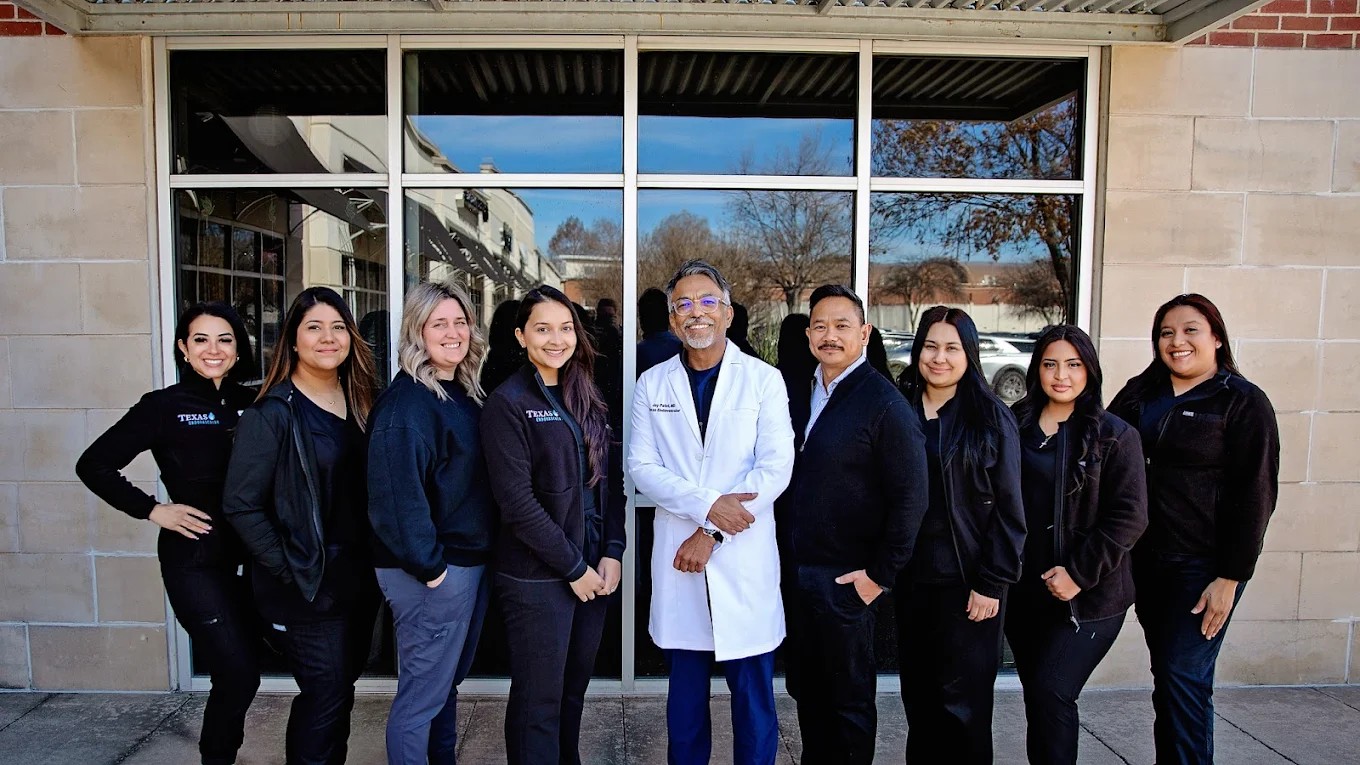
Dr. Jay Patel, a double board-certified interventional radiologist, treats joint pain patients in Plano. He also sees patients in Dallas, so ask when you call which days he is at each clinic and schedule at the location that works best for you.
Our Plano clinic treats knee osteoarthritis with GAE, frozen shoulder with FSE, tennis and golfer's elbow with TAE, and plantar fasciitis with PFE.
Joint embolization is an outpatient, image-guided procedure that reduces blood flow to the small, abnormal blood vessels that keep chronic joint and tendon inflammation going. It is done through a pinhole with a thin catheter, so there is no incision on the joint and no general anesthesia.
Texas Endovascular uses embolization for knee osteoarthritis (genicular artery embolization, or GAE), frozen shoulder (frozen shoulder embolization, or FSE), tennis and golfer's elbow (transarterial elbow embolization, or TAE), and plantar fasciitis (plantar fasciitis embolization, or PFE).
Most candidates have had joint pain for three months or more (six months for tennis or golfer's elbow) that hasn't improved with rest, physical therapy, medication, bracing, or injections, and want to avoid or delay surgery. Your physician confirms candidacy by reviewing your history and imaging. Call us or request an appointment online to find our if you're a candidate.
Surgery works on the joint or tendon through an incision and often requires general anesthesia and a longer recovery.
Embolization is done through a pinhole in the wrist, groin, or ankle with local numbing or light sedation, depending on the joint, there is no incision on the joint, and most patients go home the same day.
Most patients go home the same day with a small bandage at the puncture site and return to light activity within a day or two. Your care team will tell you when to resume sports or strenuous activity, which depends on the joint treated.
Pain usually eases over the first few weeks, and function keeps improving over the following months. The exact timeline depends on the condition being treated.
Medicare and most major insurance plans cover joint embolization when it is medically necessary. Our team verifies your benefits and explains what you can expect to pay before your procedure is scheduled.
No. You can schedule a consultation at our Plano clinic without a physician referral. Call (469) 225-3505 or request an appointment online, and our team will verify your insurance benefits before your visit.
We are at 5425 W. Spring Creek Parkway, Suite 100, Plano, TX 75024, in west Plano about a mile west of Preston Road. Call (469) 225-3505 for directions.
Scheduling
Please contact our dedicated specialists to schedule a consultation today.