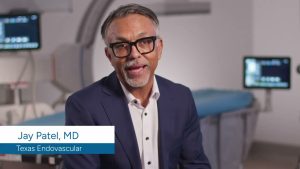
This article was medically authored by Dr. Jay Patel and last reviewed for accuracy on 07/08/2026.
Varicose veins are extremely common, they affect men and women equally and they typically get worse with age. But while these twisted, bulging veins look like they’re mainly a cosmetic issues, there’s actually a lot more going on beneath the surface of your skin. And those deeper problems are actually the reason we encourage people to treat their vein disease at the first sign of symptoms.
Key Takeaways
What’s happening with varicose veins, is that blood flow is going in the abnormal direction—it’s going in the reverse direction.
Normally, veins take blood from our legs and bring it up, back to the heart. There are little valves in the veins that help push that blood back to the heart, fighting gravity. But sometimes these valves are non-functional or damaged so, especially in patients with jobs where they’re standing a lot, the blood flow will start going in the reverse direction.
That reverse blood flow can cause quite a few symptoms, including:
When symptoms first appear, we’ll try conservative vein disease treatment options such as stockings to compress the legs and improve blood flow. However, when the stockings’ compression does not provide sufficient relief, we can look at the minimally invasive treatment options known as endovascular treatment.
Initially, we can try vascular ablation (heat) treatment, also known as radiofrequency ablation (RFA). With this procedure, we go in through a little puncture at the location of the abnormal veins and collapse the poorly functioning veins using heat. Typically, leg swelling, cramping, and heaviness will go away soon after the procedure, showing that vein treatments resolve more than just your cosmetic concerns.
Recently, we had a patient who came to us with varicose veins and her concerns were not just cosmetic. Her medical concerns were significant, as she was very bothered by heavy legs. She also had significant swelling and even some skin discoloration. To help relieve her concerns, we had to do a series of treatments on her to ablate her problematic veins.
Eventually, we were able to treat them to the point that her varicose veins were gone, as was her leg heaviness, skin discoloration and swelling. Afterward, she was happy because she could now go out, especially during the summer, with shorts on, and not have to worry about how her legs looked. More importantly, her varicose vein symptoms couldn’t slow her down any more, leaving her with tired, heavy legs at the end of her day.
Truly, this is what I wish more patients understood about varicose veins and other forms of vein disease. While you can be bothered by the surface level, cosmetic symptoms, the true focus of concern should be on the vein and valve dysfunction that lies beneath the surface of your skin. Always remember: vein disease is progressive. As a result, delaying treatment can result in worsening cosmetic and medical symptoms. And that’s why we invite you to learn more about the real worry with vein disease—and discover the wide array of minimally invasive treatment options—by contacting our team today. We have seven Texas Endovascular locations to better serve you closer to home, in the greater Dallas and Houston metro areas.
Scheduling
Please contact our dedicated specialists to schedule a consultation today.