
This article was medically authored by Dr. William Fox and last reviewed for accuracy on 06/01/2026.
After a fibroids diagnosis, many women wonder if all of their uterine tumors are equally problematic. They also want to know: which size of fibroid is dangerous? Well, fibroid size matters when it comes to your symptom burden and to your quality of life. That's because larger growths can leave you with more severe fibroids symptoms, and they may limit your treatment options. Even Sharon Stone has revealed that, because of a delayed fibroid diagnosis, she needed surgery to remove a large uterine tumor. Worse, she faced an extended recovery period because of the invasive nature of her fibroid treatment.
Now, many women are diagnosed with uterine fibroids each year. These are non-cancerous tumors that develop in and around your uterus. But not every fibroid diagnosis is the same. In fact, fibroids can range in size from almost undetectable to the size of a grapefruit.
Of course, any size of fibroid can cause complications. In fact, one study shows that in 2017, fibroids sent over 65,000 women to the emergency room. (And that reflected a big jump from 2006, the last year statistics were recorded. Because in that year, just over 23,000 women visited the ER because of fibroid symptoms.)
Obviously, health concerns can be an issue for women with any fibroid size. But, common sense does come into play here. So, the bigger the uterine fibroid, the larger an impact it is likely to have on a woman's health. And that is especially true when it comes to side effects like weight gain and uterine bloating.
Key Takeaways
When women have delayed fibroid diagnosis or treatment, tumors may continue growing. And, while the complication is rare, some tumors grow to "giant" sizes, with the largest ever recorded fibroid weighed a whopping 140 pounds! However, even in less extreme cases, fibroids of any size can lead to unwanted weight gain and bloating.)
Of course, a woman's uterus expands alongside larger fibroids. Even women with grapefruit-sized tumors will appear to gain more weight than the pounds of their tumors due to this uterine enlargement. In fact, larger fibroids can stretch a woman's uterus to the point where she appears to be 4-5 months pregnant, causing physical and emotional distress.
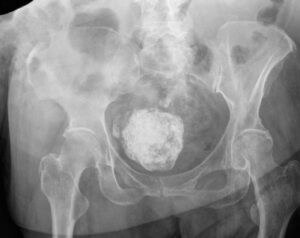
Women with large fibroids should have them imaged for more exact measurements; once your doctor has those facts, you can decide together whether the tumor must be removed surgically, or if you can explore other treatment options. There is, of course, a risk in delaying or foregoing treatment. Because, if left alone, your fibroids are likely to keep growing, causing more symptoms and possible side effects.
We don't know why women develop fibroids. Or why some fibroids remain small, while others grow large and dangerous. Certain environmental and lifestyle factors may also play a role, including hormonal imbalances, family history, your vitamin D levels and your exposure to certain chemicals, both in the air and in personal care products like hair relaxers.
Typically, there's a range of fibroid sizes. Growths are considered small if between 1 and 5 cm, or about the size of a fruit seed. We consider a fibroid medium-sized if it's 10 cm or less, or no larger than an orange. And large fibroids measure above that 10 cm range, getting as large as a watermelon.
When exploring case histories, there are plenty of cautionary tales. One 45-year-old woman had a fibroid that grew to the size of a 28-week fetus! Another woman in Brazil had a 100-pound fibroid removed from her uterus! Unfortunately, she only sought treatment—and underwent emergency surgery—when her dangerously large fibroid triggered breathing problems for that patient. But that's not the only possible concern associated with fibroid growth. Larger fibroids may also lead to complications such as:
Because unchecked fibroid growth can lead to many complications, it's important to begin exploring your treatment options as soon as you receive a diagnosis. Once you know how large your fibroids already are, you and your doctor can decide if they should be surgically removed or if other, less invasive options may help you find relief from your symptoms.
Ready to begin the treatment process? We're here to help, so contact our team to request a consultation at one of our seven Texas Endovascular locations! We can help you decide if minimally invasive treatments such as UFE Treatment will work for your size of fibroid.
Scheduling
Please contact our dedicated specialists to schedule a consultation today.