713.489.6319 HOUSTON
469.214.5251 DALLAS

713.489.6319 HOUSTON
469.214.5251 DALLAS
Diabetes and PAD are a dangerous combination. (Especially Type 2 diabetes, since most people with this disease develop a form of cardiovascular disease such as PAD. And, while the risk of organ damage from diabetes has decreased over time, there is still a high risk for arterial damage from the disease.) That's a problem, since Peripheral Arterial Disease (PAD) limits your blood flow. Then, high blood sugar levels can also compromise your blood flow. (And cause nerve damage, making you lose feeling in your extremities.) The risk for PAD can even begin if you are pre-diabetic, as studies show that atherosclerosis (artery hardening) is more common among prediabetics than in the general population.
Then, once you are fully diabetic? At that point, the disease is a strong enough risk factor for PAD that some patients will be diagnosed with Diabetic Peripheral Artery Disease (DPAD). And, when dealing with this combination, these factors mean that even small wounds can turn into big infections. At that point, your diabetic ulcer could put you at risk for amputation—in fact, the risk is so great that, in California alone, 82,000 individuals lost limbs due to diabetic complications between 2011 and 2017. As such, the most recent Scientific Statement from the American College of Cardiology recommends, regular screening for PAD in people with diabetes, using the Ankle Brachial Index (ABI) as a simple, inexpensive detection option to reduce late diagnoses and increased risk of limb-loss.
As we mentioned, diabetics lose their limbs for many reasons. The disease can raise sugar levels in the bloodstream, which in turn can affect circulation and cause organ damage. Also, according to a new study in the journal Diabetes, the disease damages your red blood cells. Specifically, it reduces small molecule microRNA-210 in those cells. And, since those molecules help regulate vascular function, this may contribute to your risk of diabetic limb loss.
Diabetics can also experience reduced sensation in the extremities (neuropathy), threatening limbs in two ways. People with circulatory and nerve damage may not know when they’ve injured their limbs. And, because they have compromised blood circulation, even minor injuries can be slow to heal. Over time, and without routine medical care, these untreated, unhealed injuries become deep wounds (ulcers). Once ulcers develop, diabetics are at immediate risk of losing part of or all of the affected limb.
Unfortunately, matters get worse when you factor in racial inequities. In fact, according to new information revealed in the Circulation journal, Black adults over 50 are at least twice as likely to suffer from PAD as their white peers. They're also more likely to seek treatment for more advanced disease, and more likely to experience adverse outcomes such as amputation or even death.
While the statistics in the study were scary, there's one that’s particularly worrying: many of these amputations could have been avoided with routine medical care. It also revealed that people who were black or Hispanic were twice as likely to face an amputation, due in large part to inadequate access to care.
So that's the bad news in this study, but here's something that can make you feel more at ease: with proper preventative care, you can keep your diabetes in good control. This can help you prevent devastating complications like amputations.
What kind of preventative vascular care do we recommend for diabetics? Diabetes can damage your blood vessels (veins, arteries and/or capillaries), causing your body to deposit cholesterol within the vessels in the hopes of preventing further damage.
Now, cholesterol is a waxy substance that occurs naturally in your cells. Your liver also makes cholesterol, or you take in cholesterol from your food. While you may not know this, your body actually needs some cholesterol to function. After all, cholesterol is involved in making vitamin D, your sex hormones, and steroid hormones such as cortisol. Plus, some cholesterol gets converted to bile acids in your body. And you need those acids to absorb vitamins a, d, e and k. In other words, you need a little bit of cholesterol to stay healthy.
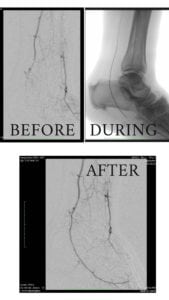
But the problems start when your cholesterol levels rise, causing a build-up that clogs your arteries and creates a condition known as atherosclerosis. (That's when your arteries narrow or harden. It's what causes PAD, leaving you at risk of heart-related complications.) And that's where our specialists can help: using interventional radiology techniques, we can remove blockages and help restore your blood flow.
Improved blood flow will reduce your risk of ulcers, help heal existing wounds, and go a long way towards preventing limb loss. Plus, it can help relieve other symptoms of PAD, including pain when you walk, hair loss and skin changes. Even better? Choosing minimally invasive PAD treatment can do more to prevent limb loss.
A new review from the European Journal of Vascular and Endovascular Surgery suggests that widening your arteries using paclitaxel-coated balloons (PCBs) ups your risk for major amputation. Fortunately, in our seven Texas Endovascular locations, we can also treat PAD with stents or atherectomy, so you have your choice of limb-saving options. Of course, we're also following new developments in treating PAD. One exciting possibility? LimFlow Inc. is developing a Percutaneous Deep Vein Arterilization System. Basically, it's a minimally invasive device that can bypass blockages in your leg arteries to boost blood flow.
What's their goal? To help interventional radiologists like the ones on our team get blood back to your feet and legs. That way, we can resolve your PAD symptoms, heal any leg ulcers, and improve your quality of life. And, while we're waiting for more date, initial results from the company's clinical device trials show that 77% of patients avoided amputations, 85% enjoyed complete wound healing, and 92% of patients started or completed healing.
Diabetes and PAD aren't your only concern: this disease can impact your veins as well. If your blood sugar levels stay elevated for too long, that can damage your blood vessels. Typically, the first blood vessels to experience damage are the ones in your leg. As a result, uncontrolled diabetes can increase your risk for varicose veins.
What does all this mean for you? Well, if you have diabetes, make sure you keep up appointments with your regular medical team. (And make sure to address any circulatory problems right away.) And, if you've got reduced blood flow or atherosclerosis, request an appointment with our team of experts. Doing so might just be the decision you make that saves your limbs!
Source Page: https://texaseva.com/sources/
Scheduling
Please contact our dedicated specialists to schedule a consultation today.