713.489.8623 HOUSTON
469.294.5589 DALLAS

713.489.8623 HOUSTON
469.294.5589 DALLAS
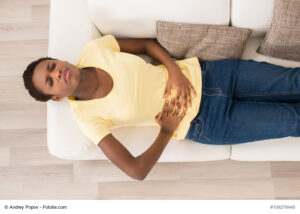
Do you need period pain relief now? Or do you want to stop period pain? You're not alone! Many women with fibroids suffer from extremely painful periods. But thanks to newly-developed hi-tech patches, special stretching techniques, plus more emerging efforts, women’s menstrual pain may finally be a thing of the past.
If you're looking for quick, non-invasive period relief, try these yoga stretches, recently recommended by Dr Alicia Jeffrey-Thomas, a pelvic floor therapist. Her top suggestions? Cycle through Child's Pose, Pigeon, Cat/Cow stretches and Spinal Circles, before ending with your legs up on the wall. Be sure to hold each pose for one minute, alternating between five-second inhalations and exhalations.
Now, if you have fibroids, these stretches alone may not offer enough pain relief. So if you need more help, keep reading for additional tips on how to help relieve period cramps.
In some cases, adding certain foods to your diet can offer period pain relief by helping inflammation or reducing uterine muscle contractions. Adding omega-3 fatty acids can reduce the intensity of your painful period. And you can find this naturally in fish, nuts and seeds.
Next, add leafy greens since they're packed with magnesium that can lower your prostaglandin levels to reduce cramps. Throw in some vitamin b6-rich poultry to boost your serotonin and dopamine levels. (Both neurotransmitters can help relieve pain.)
Don't forget to fight inflammation with your diet, since that can contribute to period pain. Anything with ginger can be helpful, but additional supplements that are rich in magnesium and zinc are also beneficial. Not one to remember a daily vitamin? Don’t worry, just grab some dark chocolate, instead. This sweet treat contains magnesium and polyphenols that reduce inflammation in your body!
Now, make sure you've got enough iron. (Especially if you have heavy periods, since they can lower your iron levels dangerously.) Finally, check your vitamin E, since getting enough can help you avoid excessive blood loss during your period.
Since 1970, women have sought period pain relief from something called a TENS machine. These are wearable devices that generate electric pulses. (Specifically, transcutaneous electrical nerve stimulation, or TENS.) In the past, devices were clunky and clearly visible to passersby. But today's mini-TENS devices may prove to be game changers.
One such device is the Allay, an ultra-thin patch you wear on your stomach. It pulses 1,000 times a second, delivering a small electric current through a wire loop. That current then produces an undetectable magnetic field into the tissue of your abdomen. The field gets your cells to pump out any excess fluid. And that helps your body fight the bloating, swelling and pain that often accompany your period.
You can wear the patch for five full, 24-hour days before you have to remove it and recharge its battery. For most women, that will cover the most painful part of your period, although fibroids can also make your period longer and heavier.
Still, in trials, the patch has been shown to reduce women’s pain levels by as much as 70%. That’s a big deal if period pain is dragging you down while you await fibroid treatment.
Two scientists in India developed Matri, a device that attaches to your lower abdomen via two adhesive gel pads. The small device is equipped with wired and wireless connectivity, along with user-friendly buttons to control the intensity of micro-pulses that block pain signals, providing 2–3 hours of relief. The inventors describe Matri as “a portable, rechargeable, safe, non-invasive and drug-free solution."
Similarly, the Livia is also a wearable patch that targets period pain with electrical pulses. Basically, those pulses distract your central nervous system from pain signals. Plus, it can stimulate your endorphins to help fight pain, busting your worst cramps in two different ways.
User feedback notes that you have to charge the Livia for 12 hours before use. It can also be a little tricky to place the usable pads in the right spot. (And the $225 price tag may be steep.) But three separate clinical trials proved its effectiveness at fighting period pain. So it may be a good option while we wait to see what happens with other treatment options. Or while you explore permanent fibroid relief.
An ongoing study, intended to run until 2030, is currently investigating whether taking Aleve before your period begins can help reduce menstrual pain. They are hoping to find a solution to chronic period pain, since lead researcher Kevin Hellman of Endeavor Health’s Evanston Hospital has identified chronic period pain as a leading cause of chronic pelvic pain. By the end of the study, he says, “We’re gonna know whether this strategy of pre-treating menstrual pain is really a guideline recommendation.” In the meantime, women can avail themselves of period pain relief options that are already available to the public.
Helping with that cause is a Canadian company, Somedays, that already has a full line of products designed to stop period pain. Currently, they offer four categories of relief products. There are heat and bath products to relieve cramps. And they have topical and edible products that help with muscle recovery which, according to their company's research, helped relieve period pain.
Even better? The Vancouver, Canada-based team keeps testing and trying out new products so they can launch new products regularly. According to founder Lux Perry, “80% of people with periods...report having moderate to severe pain during their cycle. That’s like sitting on the sidelines for 10 entire years for some of us. If you believe that people with periods and predominantly women (because this is very much a gender equity issue) deserve to have the opportunity to actively participate in their lives, then you believe in our mission.”
Well, Luz, we do believe in your mission. And we know that when your period pain is caused by fibroids, treating your uterine tumors will offer you a more permanent solution to painful menstrual cycles. If you are ready to get started, we’re ready to answer your questions about minimally-invasive treatment options. Simply reach out to our team and request a consultation at one of our seven Texas Endovascular locations.
Scheduling
Please contact our dedicated specialists to schedule a consultation today.