713-496-0785 HOUSTON
469-333-2630 DALLAS

713-496-0785 HOUSTON
469-333-2630 DALLAS
This article was medically authored by Dr. AJ Valenson and last reviewed for accuracy on 03/24/2026.
There are two types of hemorrhoids that may develop: internal hemorrhoids, that form within the lower rectum, and external ones, forming around your anus. Symptoms differ based on the location of these swollen veins. So, to answer the question, do hemorrhoids hurt, we must first determine the area of their formation.
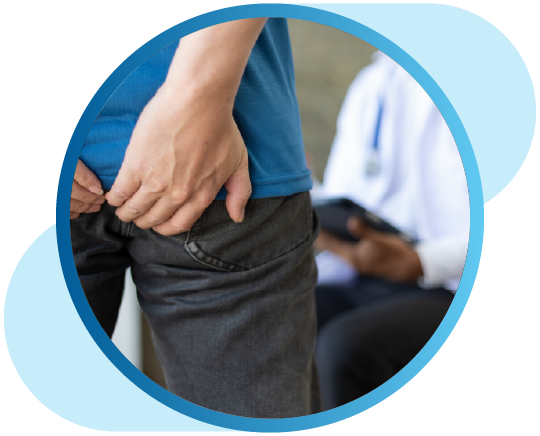
Both types of hemorrhoids are formed when blood vessels become swollen due to increased pressure on your rectum. Internal hemorrhoids form inside your anal cavity. In their early stages, they tend not to be painful, but they can cause troubling symptoms such as bleeding with bowel movements. Over time, however, these hemorrhoids might cause pain if they worsen and push through your anal opening (known as prolapse.)
External hemorrhoids form around your anal opening, and are much more likely to cause you pain. They can cause palpable lumps to form, and may cause itching, swelling or even bleeding.
Rarely, internal and external hemorrhoids can become thrombosed. (That means a blood clot has formed within the hemorrhoid.) If this happens, the hemorrhoids will hurt a lot; sitting will also become very uncomfortable due to increased swelling and inflammation.
External hemorrhoids are more likely to hurt than internal ones. However, when internal hemorrhoids are left untreated, they can prolapse through your anal opening. At that point, they can become very painful, and you will have fewer available hemorrhoids treatment options when you’re ready to find relief.
As we mentioned earlier, internal hemorrhoids can progress and prolapse when left untreated. In fact, we classify what stage your hemorrhoid is at based on its degree of prolapse. Why does your hemorrhoid stage matter? Well, Grade 1 internal hemorrhoids have not yet prolapsed. And, at that stage, the hemorrhoids may resolve with lifestyle changes such as increases in dietary fiber and reduced time spent sitting. (Especially on the toilet!)
When internal hemorrhoids progress to Grade 2 or 3, some form of medical intervention is likely to be necessary. But non-surgical intervention will still be possible, so patients can explore minimally-invasive HAE (hemorrhoid artery embolization). If, however, internal hemorrhoids reach Grade 4 classification—where the hemorrhoid remains permanently prolapsed outside the anus—this treatment option will no longer be available. Surgery may then be necessary.
If you have internal hemorrhoids and they are starting to become painful, that is likely a sign of progression. And that means it’s time to seek treatment, if you wish to avoid surgery down the road. Not sure if you’re a good candidate for minimally invasive hemorrhoid treatment? We’re here to help! Reach out to our Texas Endovascular team and request a consultation at one of our seven locations in the Dallas and Houston regions. During your appointment, we can evaluate your hemorrhoid grade and discuss available treatment options.
Scheduling
Please contact our dedicated specialists to schedule a consultation today.